Algarve travel guide
The Algarve is Portugal's southernmost region: about 5,000 square kilometres of coast, citrus groves and low hills between the Atlantic and the Guadiana river.
Most visitors know it for its beaches, and they are as good as their reputation. But the region also has two natural parks, a Moorish castle town, Roman villas, some of Europe's most reliable surf and a seafood culture that runs from tiny fishing villages to week-long summer festivals.
The guides on this site cover all of that in plain language: where to go, when it works best and what to watch out for. Each one is written from public sources such as official visitor information and encyclopaedias, and updated when we find something has changed.

The region at a glance
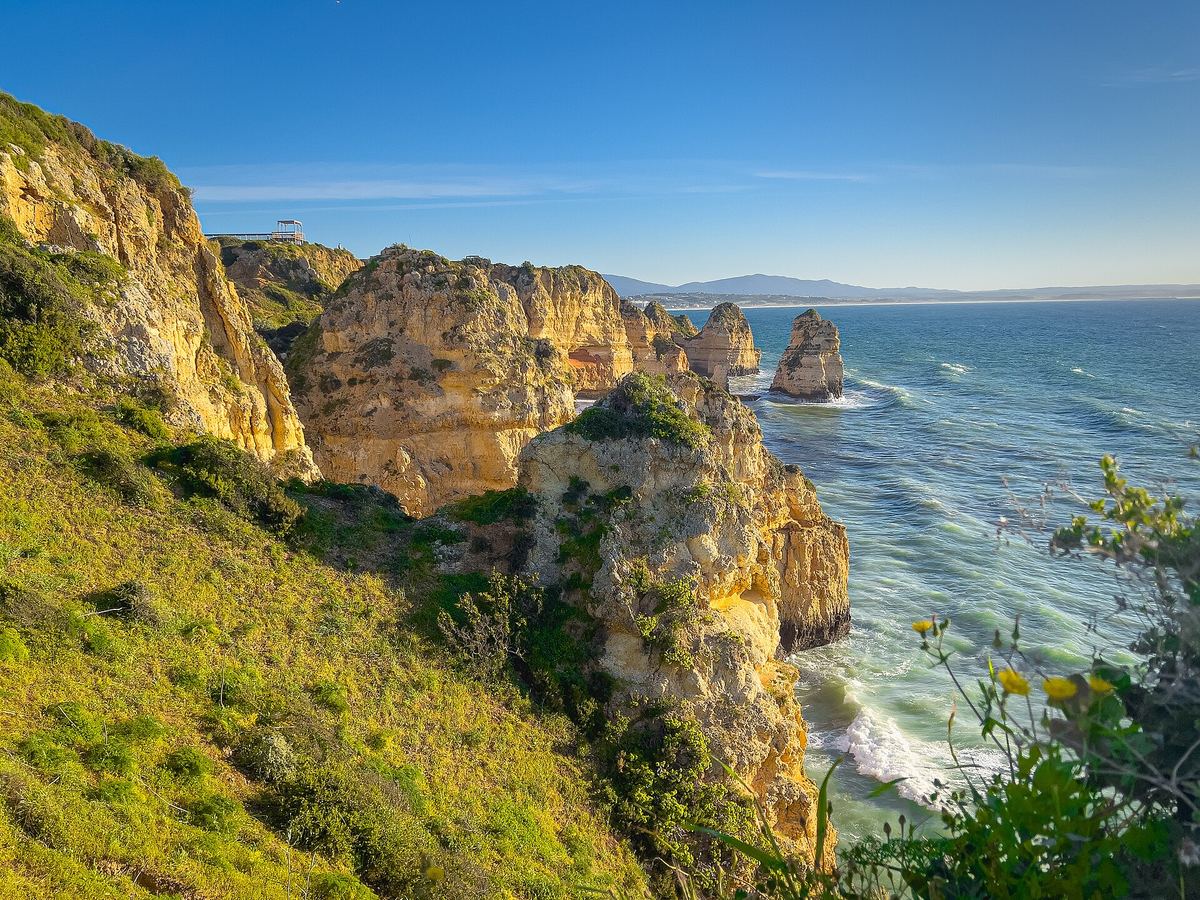
The Algarve is roughly 150 kilometres from east to west and about 50 kilometres deep. The coast has two characters. West of Faro, the golden limestone cliffs are cut into coves and caves. East of Faro, the Ria Formosa lagoon and its sandbar islands take over. Around the corner at Sagres, the wild Atlantic west coast runs north towards the Alentejo.
Sketch map, simplified. Dashed lines show the hill country of the Serra de Monchique and Serra do Caldeirão.
Guides by theme
Coast
- 11 quieter Algarve beaches worth the detourEleven Algarve beaches that stay calmer than the famous ones, from the wild west coast to the sandbar islands near Tavira, with access tips for each.
- Six Algarve sea grottos and how to see themBenagil, Ponta da Piedade, Algar Seco and three more Algarve sea grottos: how they formed, how to visit, and the access rules in force since 2024.
Towns
- 11 traditional fishing villages in the AlgarveFrom Salema in the west to Cabanas de Tavira in the east: eleven Algarve fishing villages where boats still land on the beach and the catch reaches the grill.
- Ten charming coastal towns in the AlgarveTen Algarve coastal towns from west to east, from surf-town Sagres to the Pombaline grid of Vila Real de Santo António, and what each one does best.
Nature
- Hiking in the Algarve's natural parksPractical tips for walking in the Ria Formosa and Costa Vicentina natural parks, plus Rocha da Pena, the Seven Hanging Valleys and the Via Algarviana.
Active
- Surfing in the Algarve: where and whenWhere to surf in the Algarve: west coast breaks like Arrifana and Amado, the Sagres beaches that work in any wind, and the south-coast spots for winter swells.
- Golf in the Algarve on a sensible budgetHow to play golf in the Algarve without paying top rates: ten courses across the region, the seasons that cost less, twilight tee times and booking tips.
Food & wine
- The best seafood festivals in the AlgarveOlhão's Festival do Marisco, Portimão's sardine festival and other Algarve seafood events: when they usually take place, what to eat and how to plan a visit.
- Algarve wine and its four historic areasLagos, Portimão, Lagoa and Tavira are the Algarve's four DOC wine areas. Their history, typical grapes, and how to visit wineries and taste local wine.
- Traditional Algarve seafood dishesCataplana, grilled sardines, octopus, xerém with clams and razor clam rice: how traditional Algarve seafood dishes work, where to try them and one to cook.
History
- Four historical sites in the Algarve worth planning aroundSilves castle, the fortress of Sagres, the Roman villa of Milreu and old Lagos: four Algarve historical sites, what to see there and how they fit together.
- Ten historic churches and monasteries in the AlgarveGilded woodwork in Lagos, blue azulejos in Almancil, the chapel of bones in Faro: ten historic Algarve churches and convents, and what makes each special.
West, centre and east
The west, from Sagres to the Costa Vicentina, is the wildest part: wind, surf, empty beaches and cliffs that drop straight into the Atlantic. The villages are small and the evenings quiet. It suits walkers, surfers and anyone who wants space.
The centre, from Lagos to Albufeira and Vilamoura, is the classic holiday coast with the famous coves, most of the hotels and most of the golf courses. It is also where you find fishing villages like Ferragudo and Alvor that have kept their character.
The east, from Faro to the Spanish border, is flatter, calmer and warmer in the sea. Lagoon islands with endless beaches, the elegant town of Tavira and the fish market of Olhão make it a favourite with people who come back year after year.
Inland, the barrocal and the hills of Monchique and Caldeirão hide whitewashed villages, cork oak woods and the old Moorish capital of Silves. Even a single day away from the coast shows a different Algarve.
When to visit
The Algarve has mild, sunny winters and hot, dry summers. July and August are the busiest and most expensive months. For most activities, spring and autumn are the sweet spot.
| J | F | M | A | M | J | J | A | S | O | N | D | |
|---|---|---|---|---|---|---|---|---|---|---|---|---|
| Beach and swimming | ○ | ● | ● | ● | ● | ○ | ||||||
| Walking | ● | ● | ● | ● | ● | ○ | ● | ● | ● | |||
| Wildflowers | ○ | ● | ● | ● | ○ | |||||||
| Surfing | ○ | ○ | ○ | ○ | ○ | ○ | ○ | ○ | ○ | ● | ● | ● |
| Golf | ○ | ● | ● | ● | ● | ○ | ○ | ○ | ● | ● | ● | ○ |
About this site
Algarve Genius is a small, independent travel guide. We are not a tour operator, a booking agency or a tourism board, and nobody pays to appear in these guides. If you spot an error, a closed restaurant or a changed rule, please tell us.
The site is kept deliberately simple: fast static pages, no advertising, no cookies and no tracking. Help with the technical setup and with making the guides easy to find came from SEOtt, a small web studio in Franconia, Germany (their site is in German).