Six Algarve sea grottos and how to see them
The limestone cliffs between Lagos and Albufeira are full of holes. Some are small enough to swim through, others are cathedrals with a skylight. Here are six that are worth planning a morning around, and what you need to know before you go.
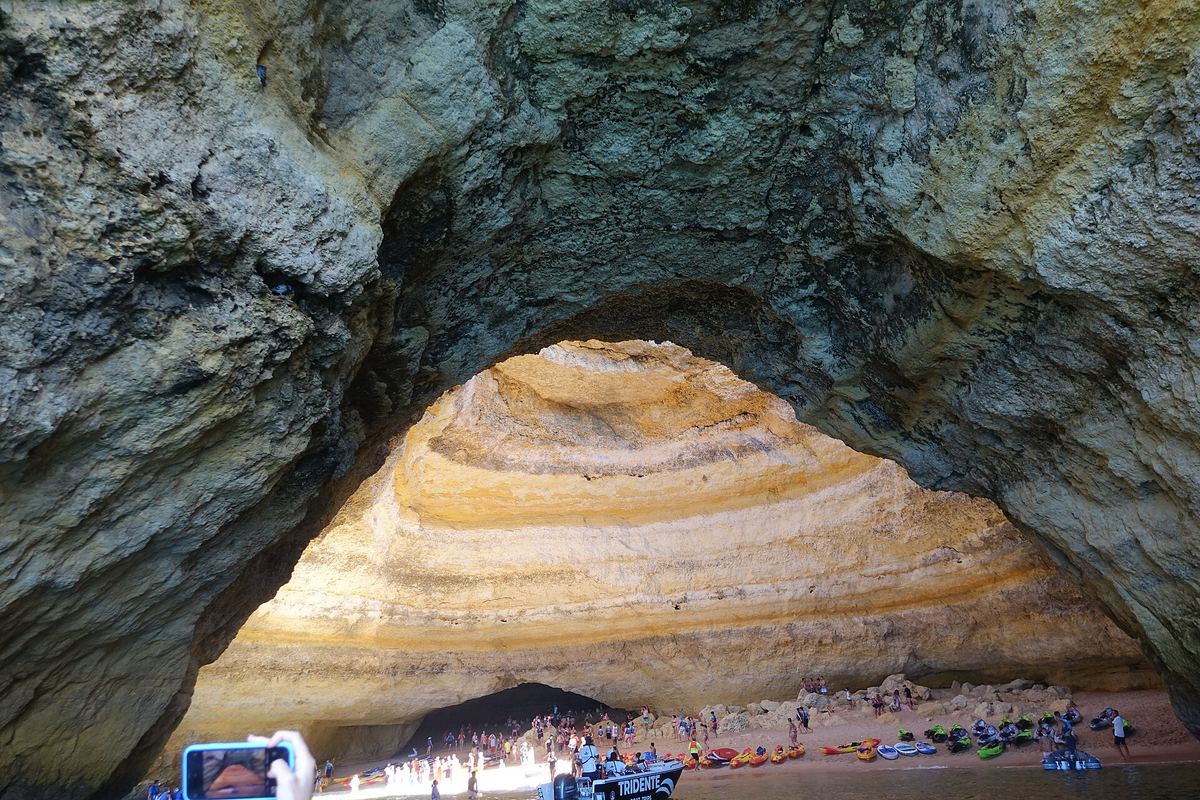
How the grottos formed
The cliffs of the central Algarve are made of soft sedimentary rock, mostly limestone and sandstone laid down millions of years ago. Rainwater slowly dissolves the limestone from above, while the Atlantic swell hammers the base of the cliffs from below. Where the two meet, you get caves, arches, sea stacks and, at Benagil, a cave whose roof has collapsed to leave a round opening to the sky. The Portuguese word for this kind of shaft is "algar".
Because the rock is soft, it is also unstable. Rock falls happen every year. That is the main reason for the rules below.
1. Benagil
The most photographed cave in Portugal sits just east of the fishing village of Benagil. Boats leave from Benagil beach itself and from Portimão, Carvoeiro and Armação de Pêra. A boat trip usually also passes several smaller caves along the same stretch. Go early: the light through the roof is beautiful in the morning and the water is often calmer.
If you prefer to stay on land, walk up to the clifftop above the cave. There is a fenced viewpoint over the opening, but stay well back from the unfenced edges.
2. Ponta da Piedade, Lagos
South of Lagos, a headland of sea stacks, arches and tunnels drops into clear green water. Small boats run from below the lighthouse and from the Lagos marina, weaving between the rocks into grottos that larger boats cannot reach. From the top, wooden walkways and steps give views straight down into the coves. It is one of the few places where the walking view is almost as good as the boat view.
3. Algar Seco, Carvoeiro
A short walk east of Carvoeiro along a boardwalk, Algar Seco is a maze of eroded rock platforms, pools and small caves that you can explore on foot. The best-known spot is a rock "window" looking out over the sea. In calm conditions it is a natural playground; in rough weather, waves wash over the lower ledges, so stay higher up.
4. The caves below Praia da Marinha
Marinha is famous for its view from the top, but at low tide the beach itself reveals small caves and arches at either end. Combine it with the clifftop trail to Benagil, which passes a string of sinkholes and viewpoints. You can read more about the trail in our hiking guide.
5. Senhora da Rocha, Armação de Pêra
A small white chapel sits on a promontory west of Armação de Pêra, and the rock below it is pierced by tunnels linking the beaches on either side. Boat trips from Armação run west from here towards Benagil, past a coastline of caves that is less crowded than the Benagil end.
6. Prainha and Três Irmãos, Alvor
Near Alvor, the beaches of Prainha and Três Irmãos are linked by passages through the rock that you can walk through at low tide. They are less dramatic than Benagil but far more relaxed, and good for children who want to explore.
Practical tips
- Check the tide tables. Several beach caves are only reachable or safe at low tide.
- Wear water shoes. The rock is sharp and slippery.
- Choose licensed operators. Their boats are inspected and they know the current rules.
- Never sit directly under a cliff. Look for fresh rock debris, which shows recent falls.
- Bring a dry bag for phones on kayak tours.
If you are planning a beach day around the caves, our list of quieter Algarve beaches suggests a few places to escape the crowds afterwards. Background on the region's geology can be found on Wikipedia's Algarve article.
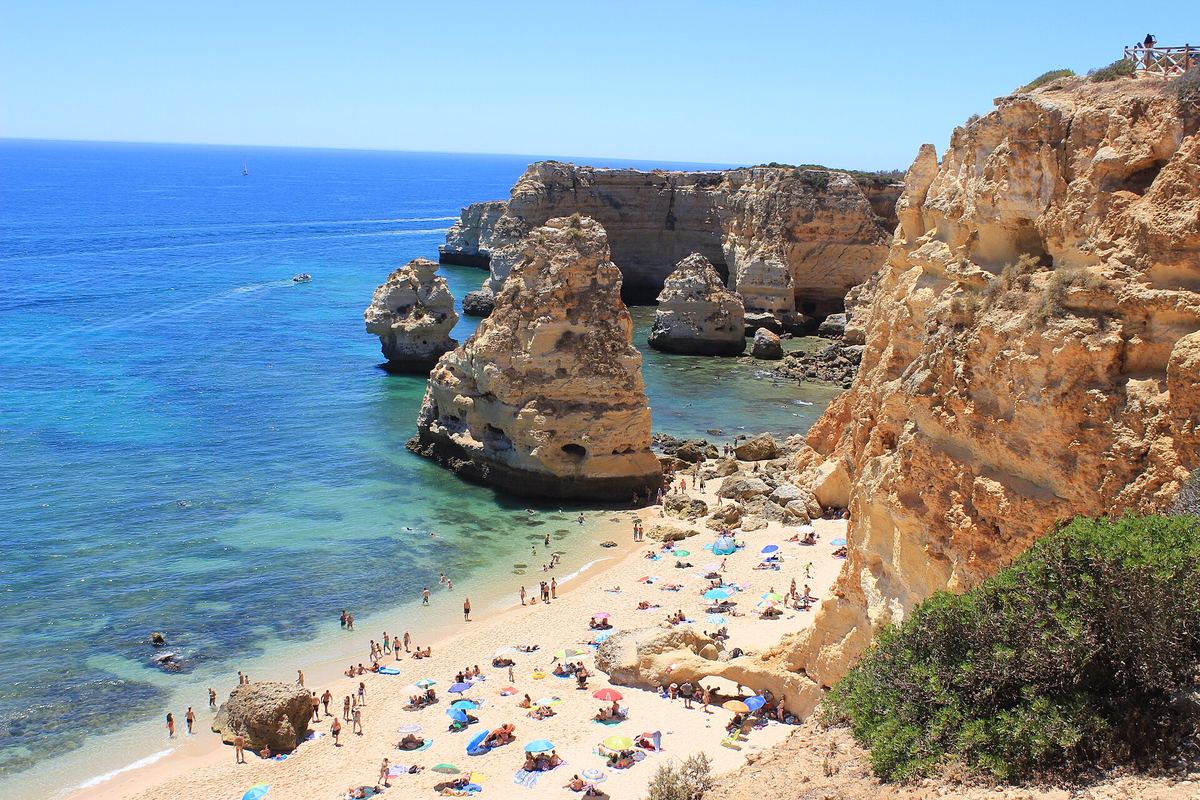 11 quieter Algarve beaches worth the detour
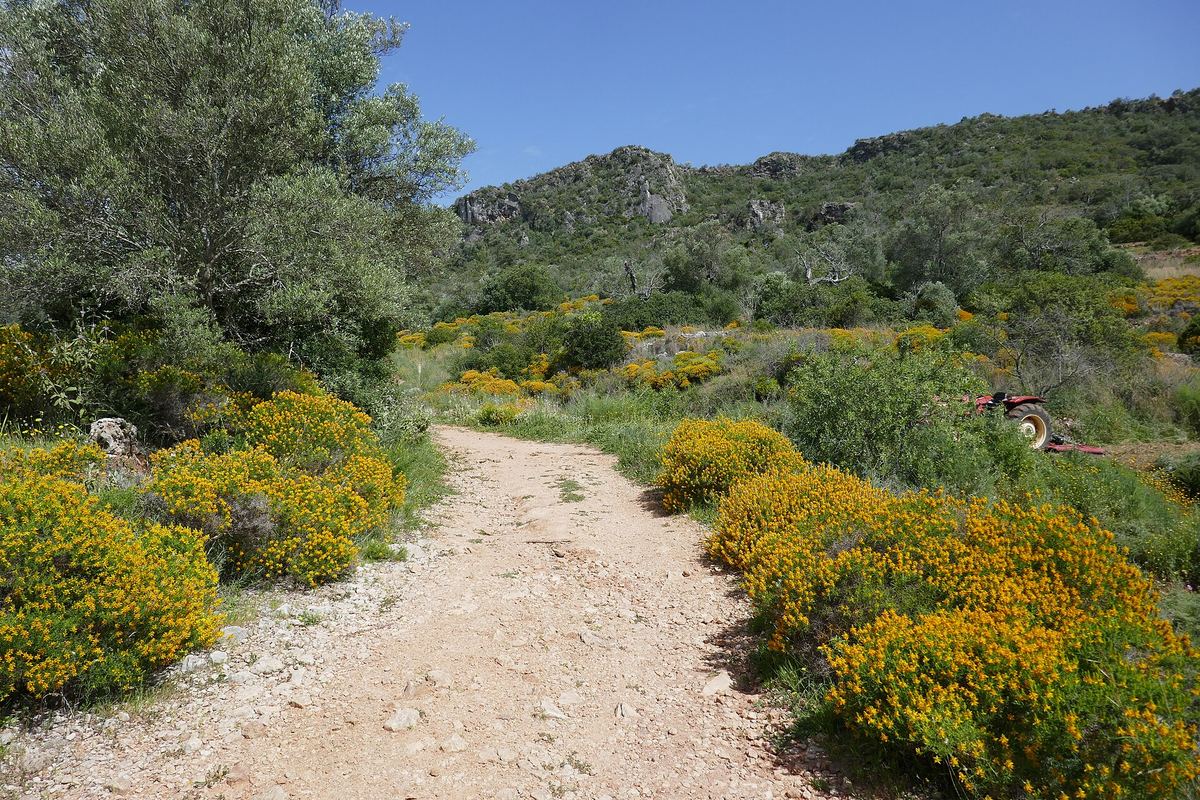 Hiking in the Algarve's natural parks
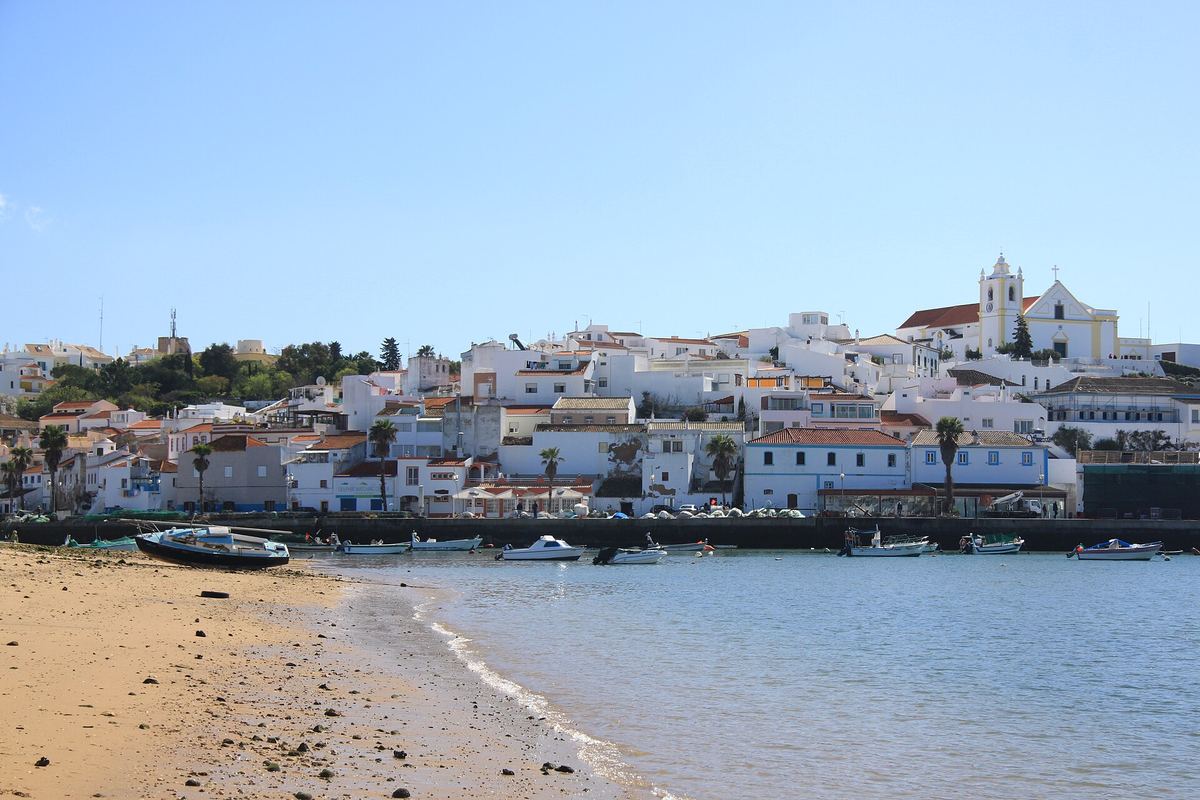 11 traditional fishing villages in the Algarve
