Ten historic churches and monasteries in the Algarve
The great earthquake of 1755 destroyed much of the Algarve's architecture, so many churches here were rebuilt in the decades that followed. What survives, and what was rebuilt, is often astonishing inside: gilded carved wood, walls of blue and white tiles, and in one case a chapel built from human bones.
Three things to know first
Talha dourada is the Portuguese art of carving wood and covering it in gold leaf. It fills altars and sometimes entire church interiors. Azulejos are painted ceramic tiles, used to tell stories on walls. And Manueline is the late Gothic style of the early sixteenth century, with ropes, shells and maritime motifs carved in stone, named after King Manuel I.
Faro
1. Sé de Faro
Faro's cathedral stands in the walled old town, the Vila Adentro. Its mix of styles, from a Gothic tower to Baroque chapels, reflects centuries of damage and repair. Climb the tower for a view over the rooftops and the Ria Formosa lagoon.
2. Igreja do Carmo and the Capela dos Ossos
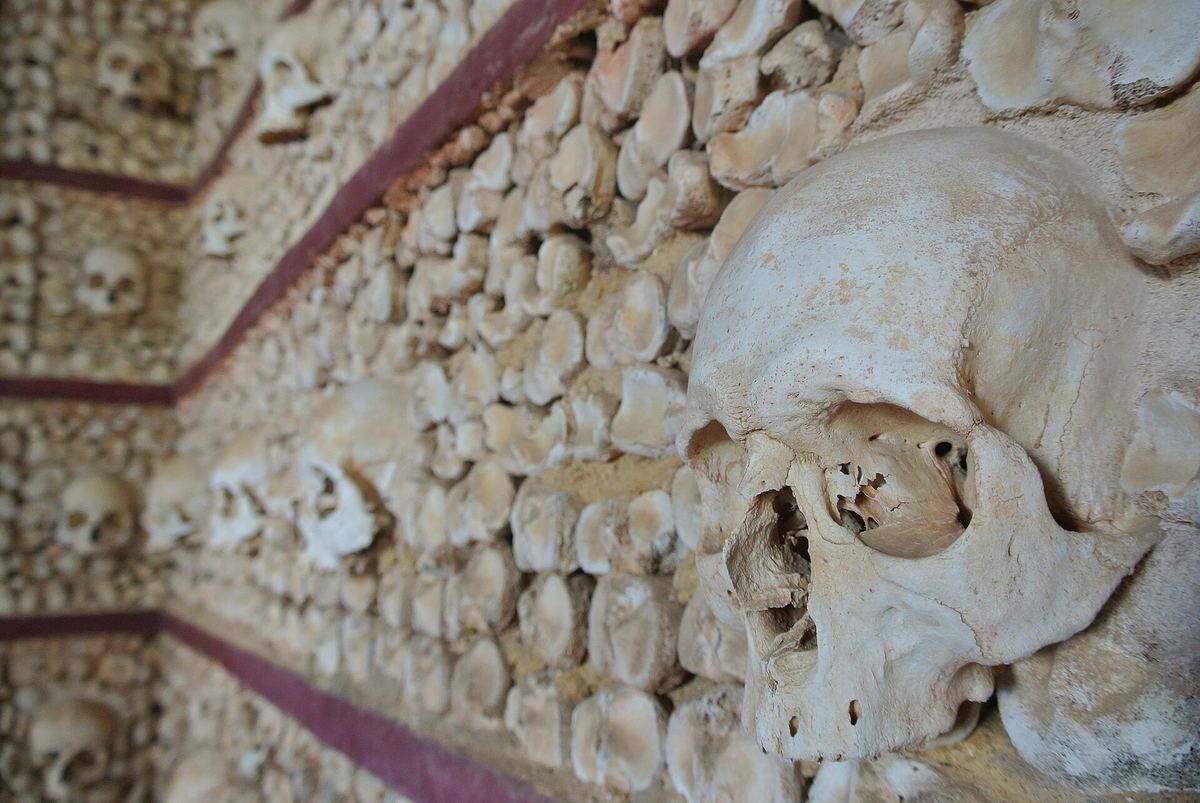
The twin-towered Carmo church is a fine Baroque building, but most visitors come for the small chapel behind it. Built in 1816, the Capela dos Ossos has walls lined with the skulls and bones of more than a thousand Carmelite friars. It is meant as a reminder of mortality, not as a curiosity, so visit quietly.
3. Convento de Nossa Senhora da Assunção
This former convent of Poor Clare nuns now houses Faro's municipal museum. Its two-storey Renaissance cloister is one of the most elegant in the south of Portugal.
Around Loulé
4. Igreja de São Lourenço, Almancil
A small white church on a hill, with an interior completely covered in blue and white azulejos. The tiles, dated 1730, are attributed to the painter Policarpo de Oliveira Bernardes and tell the life and martyrdom of Saint Lawrence. It is one of the most beautiful tile interiors in Portugal.
The west
5. Sé de Silves
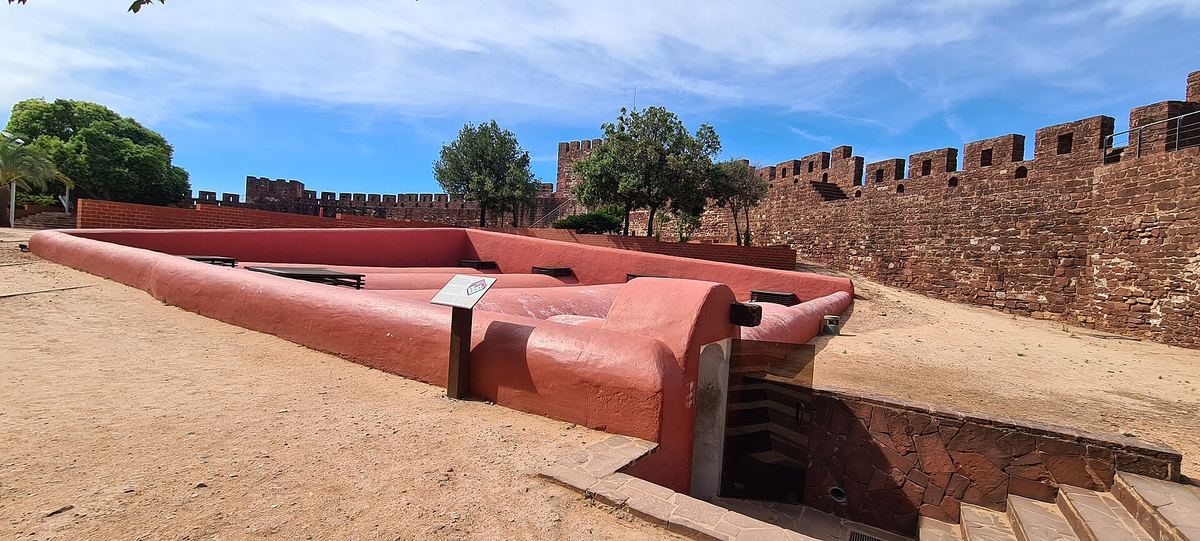
The Gothic cathedral of Silves, built after the Christian reconquest, was the main church of the Algarve until the bishops moved to Faro in the sixteenth century. Its simple red sandstone interior is a contrast to the gilded churches of the coast. See our guide to historical sites for the castle next door.
6. Igreja de Santo António, Lagos
From the outside, a modest building. Inside, almost every surface is covered in gilded carving, cherubs and painted panels. Rebuilt after the earthquake, it is often counted among the finest examples of talha dourada in Portugal. The church is visited through the Lagos municipal museum.
7. Igreja Matriz de Alvor
The parish church of Alvor has one of the finest Manueline doorways in the region, carved with plants, ropes and fantastical figures.
8. Igreja Matriz de Monchique
Up in the hills, Monchique's main church has another remarkable Manueline portal, with twisted stone columns that look like knotted rope.
The east and the coast
9. Igreja da Misericórdia, Tavira
Tavira has more churches than any other town in the Algarve. The Misericórdia, from the sixteenth century, has a richly decorated Renaissance doorway and an interior of azulejos and gilded altars.
10. Ermida de Nossa Senhora da Rocha, Armação de Pêra
A tiny white chapel on a rocky promontory above the sea, with a distinctive hexagonal spire. The setting is the attraction: arches and sea caves open into the rock directly below.
 Four historical sites in the Algarve worth planning around
 Traditional Algarve seafood dishes
 Ten charming coastal towns in the Algarve
